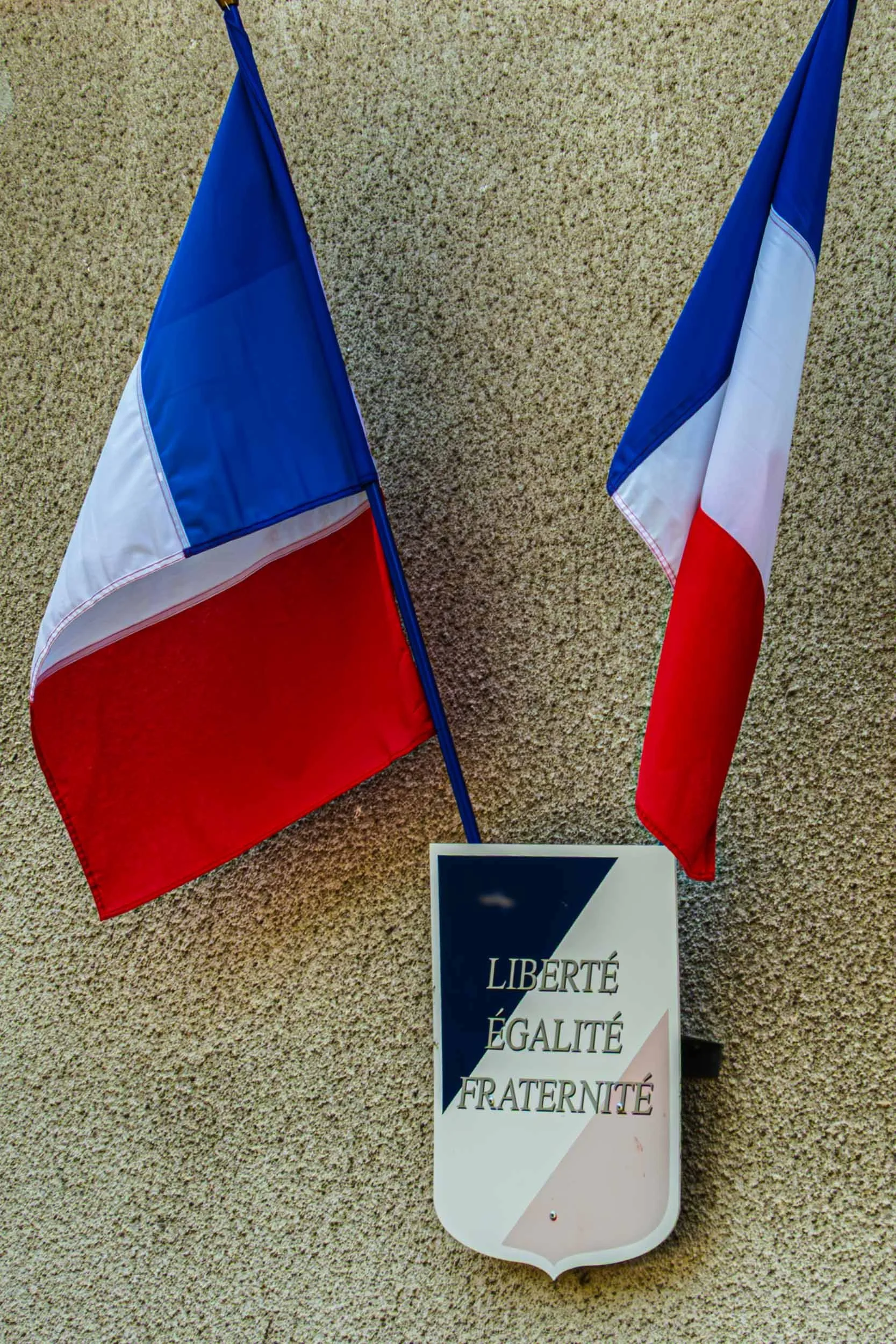
The French Revolution was ugly. A one year Reign of Terror with 17,000 people guillotined and 20,000 people dying in prison. The King was beheaded and replaced by an Emperor.
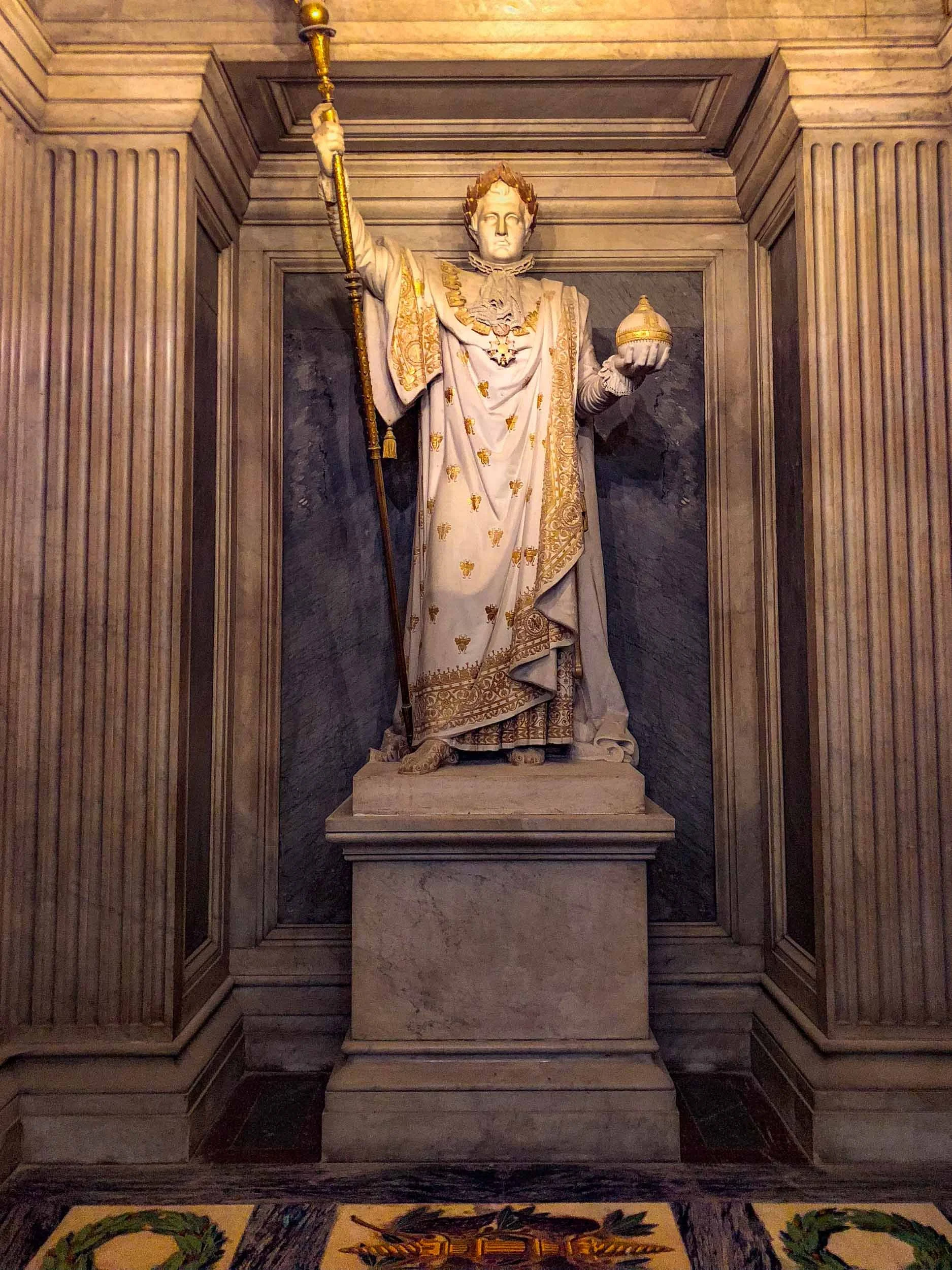
The above sculpture idolizing Napoleon is close to the sarcophagus containing his remains. He died in exile and 40 years after the King had his remains returned.
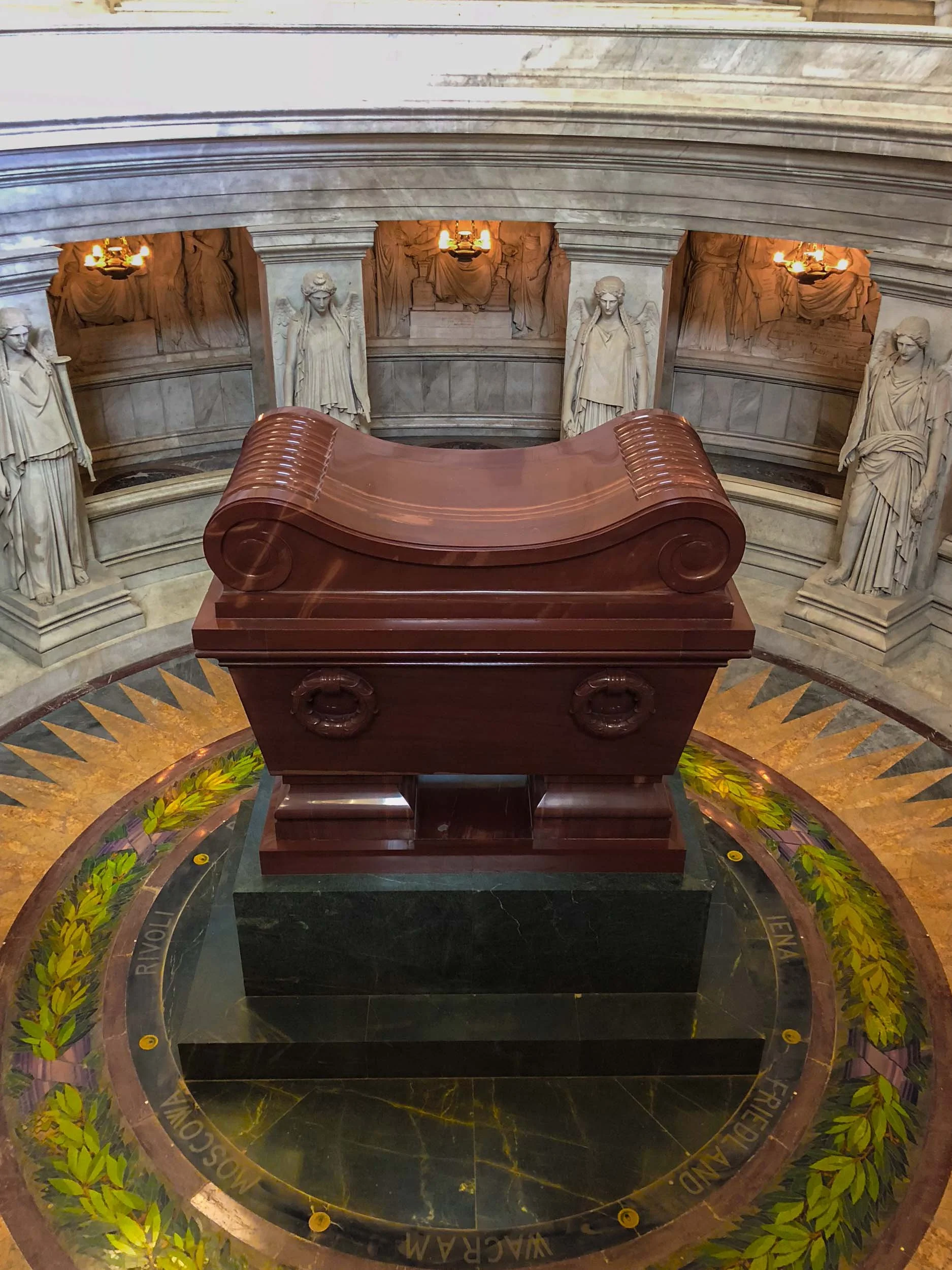
Napoleon's sarcophagus is carved from rare Russian quartzite and contains a nest of six protective coffins. Twelve statues plus a floor mosaic celebrate his military triumphs.
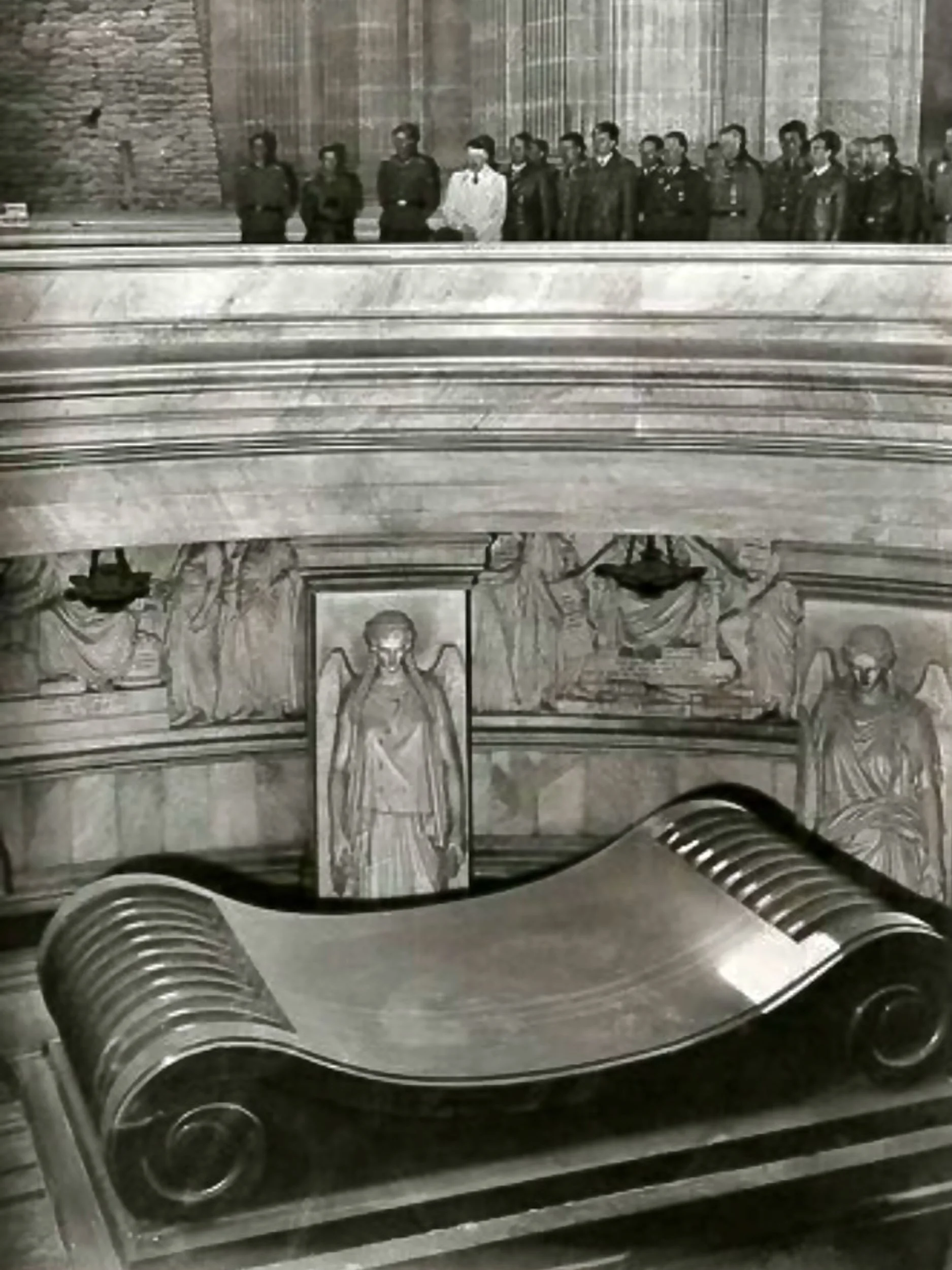
In June 1941, in his white raincoat, surrounded by his generals, Adolf Hitler stood for a long time gazing down at his hero. He described the moment as “one of the proudest of my life.”
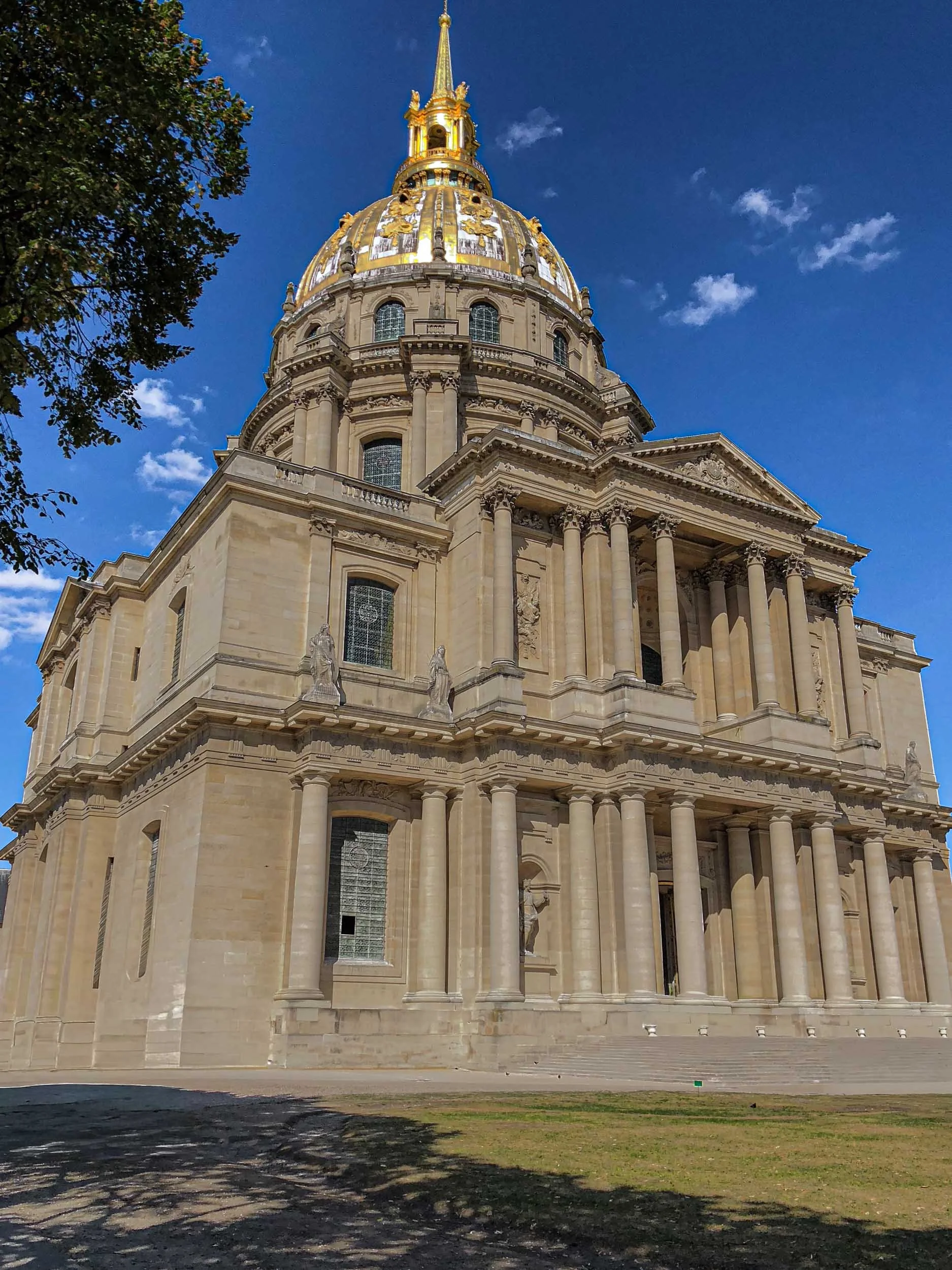
Napoleon's tomb lies within the Dôme des Invalides, built in 1677 for veterans. It was Paris' tallest building until the Eiffel Tower was erected. Napoleon was laid to rest there in April 1861.
Paris hosts a bi-annual “celebration of the arts” called La Biennale. Sixty-two countries gather for one week to showcase over 6,000 years of art, fine jewelry and design. The event begins with an exclusive black-tie gala dinner held under the glass dome of the Grand Palais. The dinner hosts 800 guests, and my sister and I were lucky enough to attend in 2018.
On display at the event were several paintings, including the one at left by Marc Chagall.
At right is the first course of dinner - a small cheese appetizer that appears to be hand painted.
The character, or clown in the painting has a two-toned face of green and orange, topped by a bird-like creature of orange and yellow. Now look more closely at the cheese appetizer. The dish pays tribute to the painting that was on display! The colors and shape of the cheese are a nod to the clown in Chagall’s painting. Anyone who saw that painting would remember that striking character and connect the dots when they saw the first course of their meal. That is attention to detail! Click the “Play” button on the image below to see how he last course of dinner, the desert, was presented.
PLACES / FRANCE Gallery Pages